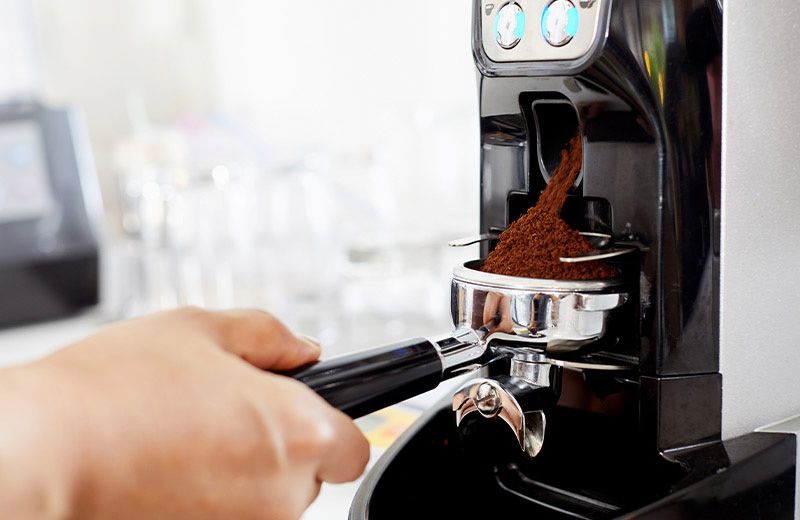
Traditional coffee grinders typically use brushed motors or AC induction motors. During operation, brushed motors generate sparks due to friction and contact between the brushes and the commutator, resulting in significant energy loss. AC induction motors, although brushless in design, are asynchronous motors that suffer from slip losses, copper losses, and iron losses higher than those of DC motors. In contrast, brushless DC motors employ electronic commutation technology, eliminating such energy losses and enabling more efficient conversion of electrical energy into mechanical power. Brushed motors generally achieve efficiencies of 65%–75%, while AC induction motors are typically lower at 55%–70%. Brushless DC motors, however, can reach efficiencies of 80%–90% (with peak efficiencies up to 95%). For commercial coffee machines, this means that even during peak business hours, large volumes of coffee beans can be ground with lower energy consumption — reducing operating costs while aligning with the growing trend toward energy conservation and environmental sustainability.
Brushless DC motors also offer superior speed control and torque output characteristics. With precise drive control, they can adjust grinding speed (500–2,000 rpm) and torque (5–15 kg) according to different coffee bean varieties, roast levels, and barista requirements — enabling precise adjustment of grind particle size. Whether it's fine grinding for espresso or coarser grinding for French press, brushless DC motors deliver consistent, stable grinding performance to ensure every cup achieves optimal flavor and taste.